About Hale
A garage door shop that lives in the same heat your door does.
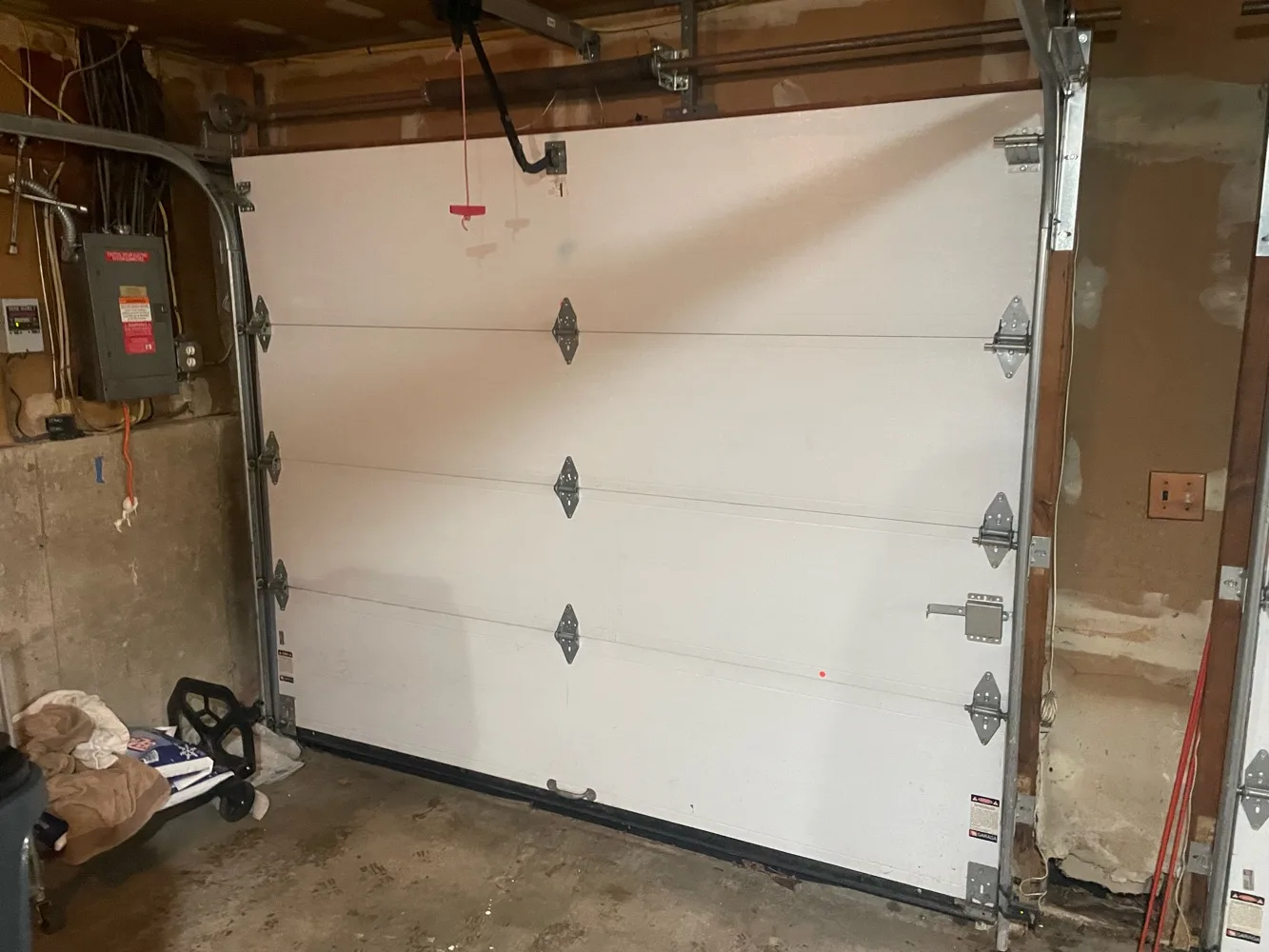
We are based on East Shea Boulevard in Fountain Hills and we work on residential doors across the north-east Valley. The desert is not a backdrop to the work here — it is most of the reason for it.
The work
Most of what we do is undoing a summer
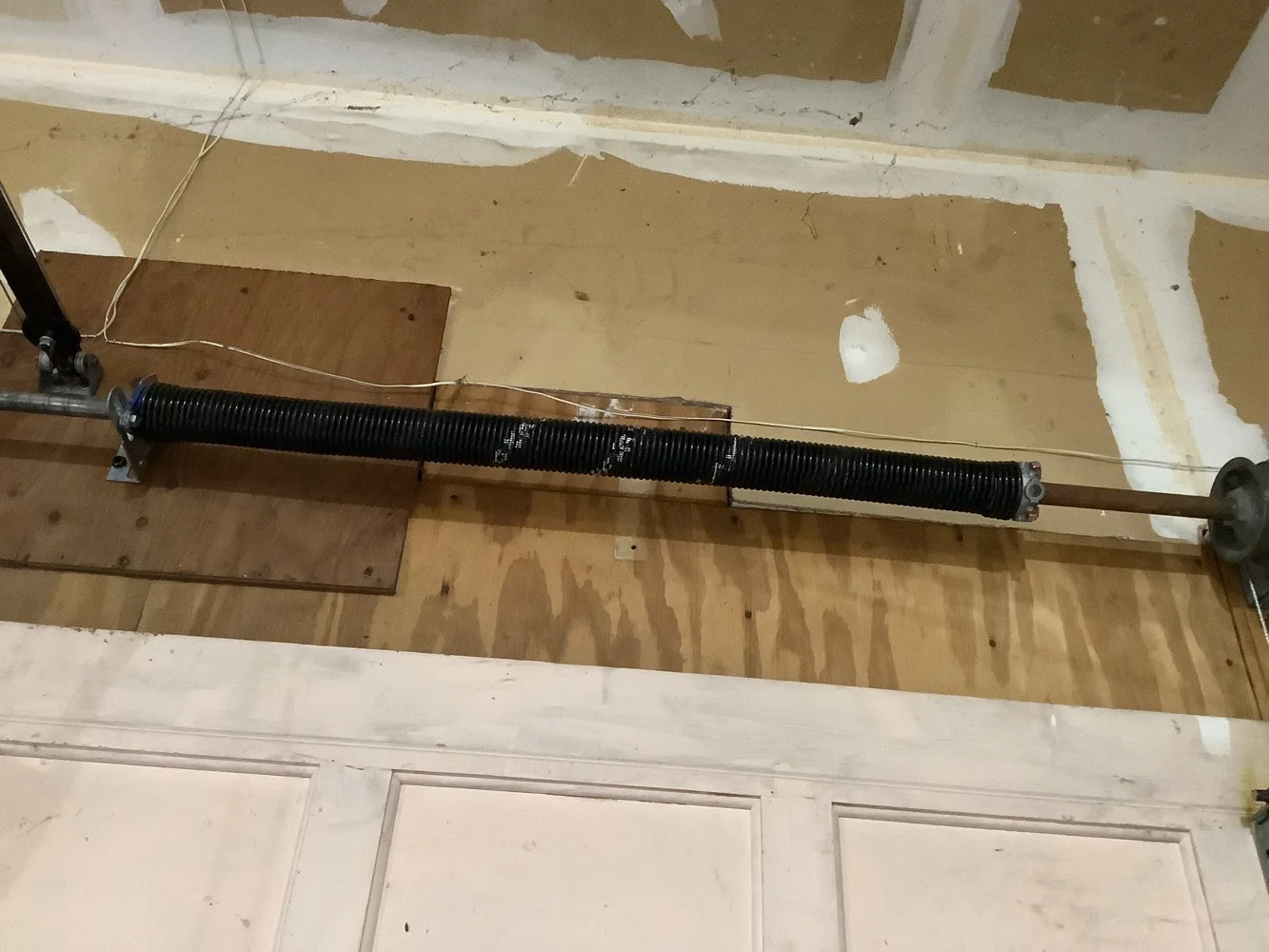
A garage door is the largest moving object on a house, and in this part of Arizona it spends its life on the hot side of the wall. The face takes direct afternoon sun for months. The ceiling above the opener holds heat well past dark. The concrete under the bottom seal stays warm enough to cook rubber long after the air has cooled.
None of that is dramatic on any given day, which is why it surprises people when the spring finally goes or the opener stops answering the remote from the driveway. It has been coming for four summers. Our job is mostly finding the part of the system that has quietly aged out and putting it back before the rest of it takes the load.
How we work
One door at a time, tested before we leave
We are a small operation and we like it that way. It means the person who takes the call is the person who looks at the door, and it means nobody is being pushed to turn a service call into a sale. We do not run a call centre, we do not sell maintenance subscriptions, and we do not quote a number over the phone that changes once we are standing in your garage.
What we will do is tell you what we can see, what it will cost, and what is going to want attention next. If that is a job for somebody with a bigger crew and a bigger truck, we will say so rather than take it on badly.
Fix the thing that failed, find the thing that caused it, and leave with the door running by hand as easily as it runs on the motor.
Our approach
Three steps, every visit, in the same order
It is not a script for its own sake. Doing it in this order is what stops an opener being replaced when the real fault was a five-dollar roller.
Step One
The call
We ask what the door is doing, not what you think is broken. The noise, when it started, whether it happened all at once or crept up over a month. That conversation narrows most faults to two or three possibilities and tells us what to load in the van.
Step Two
The look
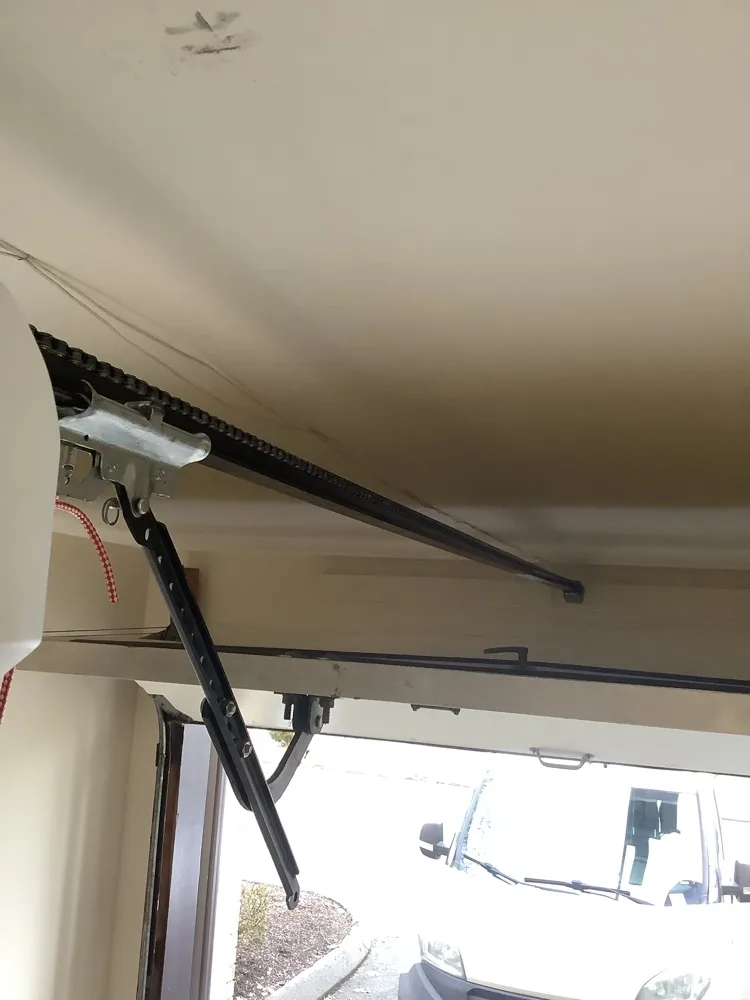
Release cord pulled, door run by hand, balance checked at the halfway point. Springs, cables, drums, rollers, hinges, track and brackets all get eyes on them before the opener is even switched on. Then you get the price, before any work starts.
Step Three
The test
Nothing is finished until the door has run its full travel several times, reversed cleanly on the safety eyes and the contact reverse, and sat still by hand at the halfway mark. We tell you what we found, what we changed and what is worth watching next year.
On the van
The parts of a door people never see
Springs, cables, pulleys and opener heads — the hardware that carries the weight while the panels get all the attention.
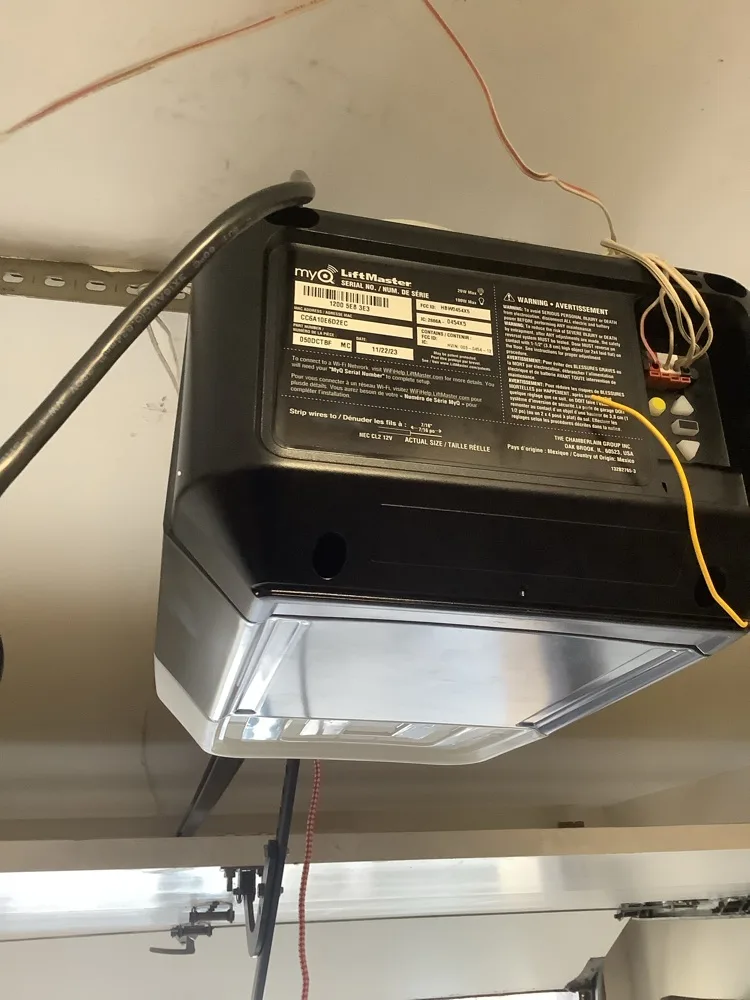
The serial plate on an opener head. Model and date decide whether a board is still available or the unit is finished.
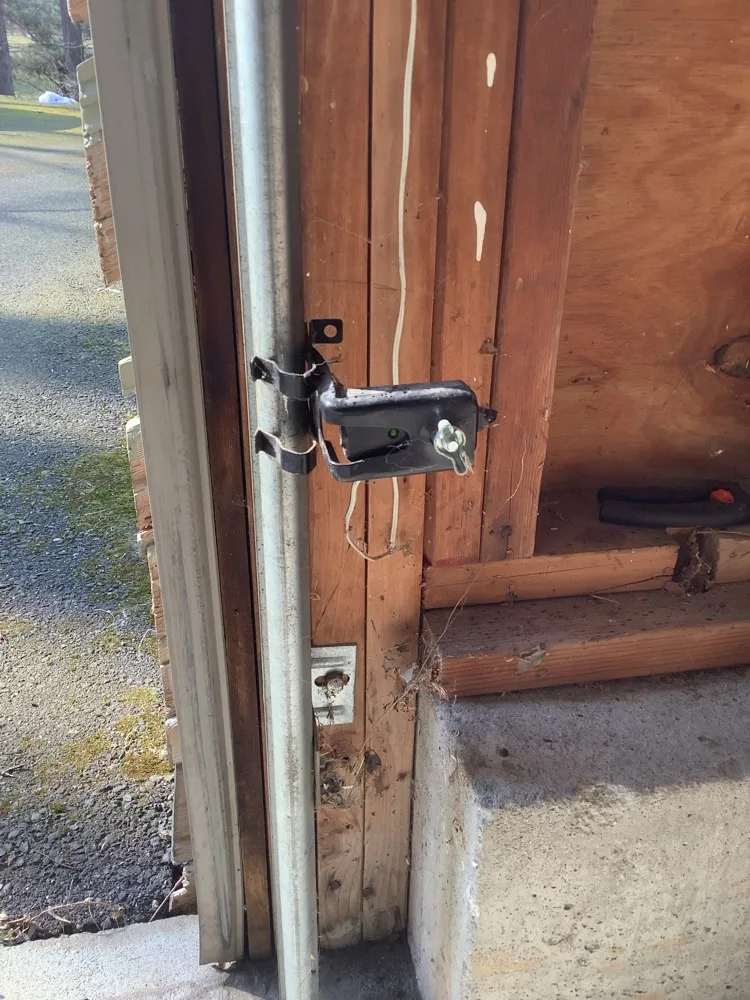
A safety photo eye on the jamb, showing green. Knocked half a degree out of line, it will reverse a door for no visible reason.
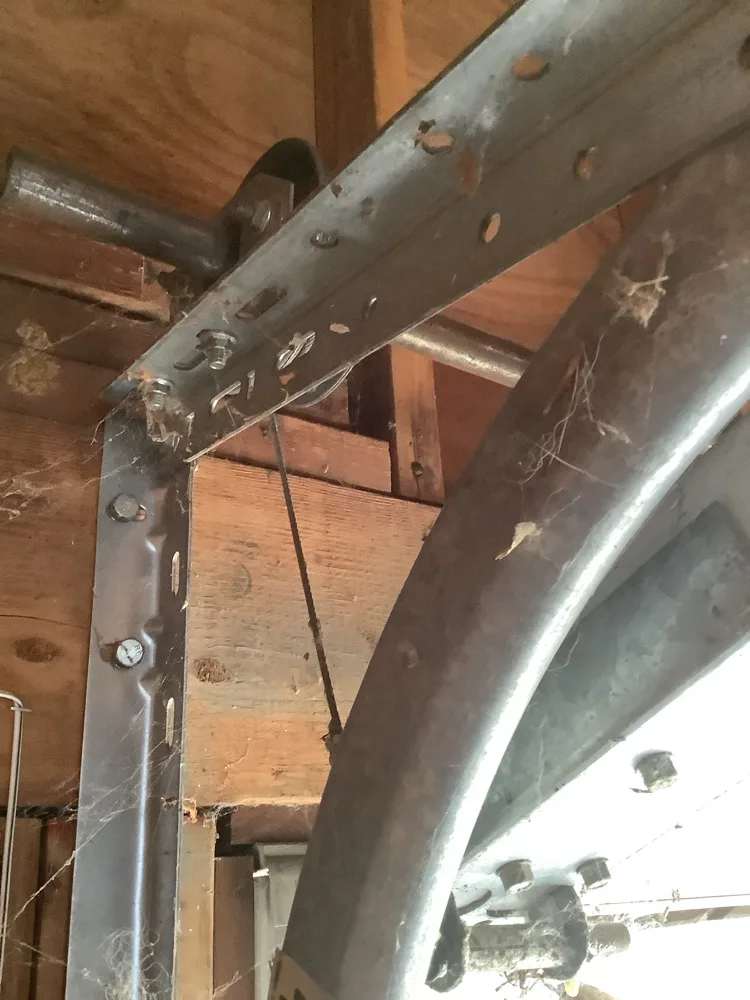
The radius bend of an old track in rough timber framing. This is where a door binds first once the jamb moves.
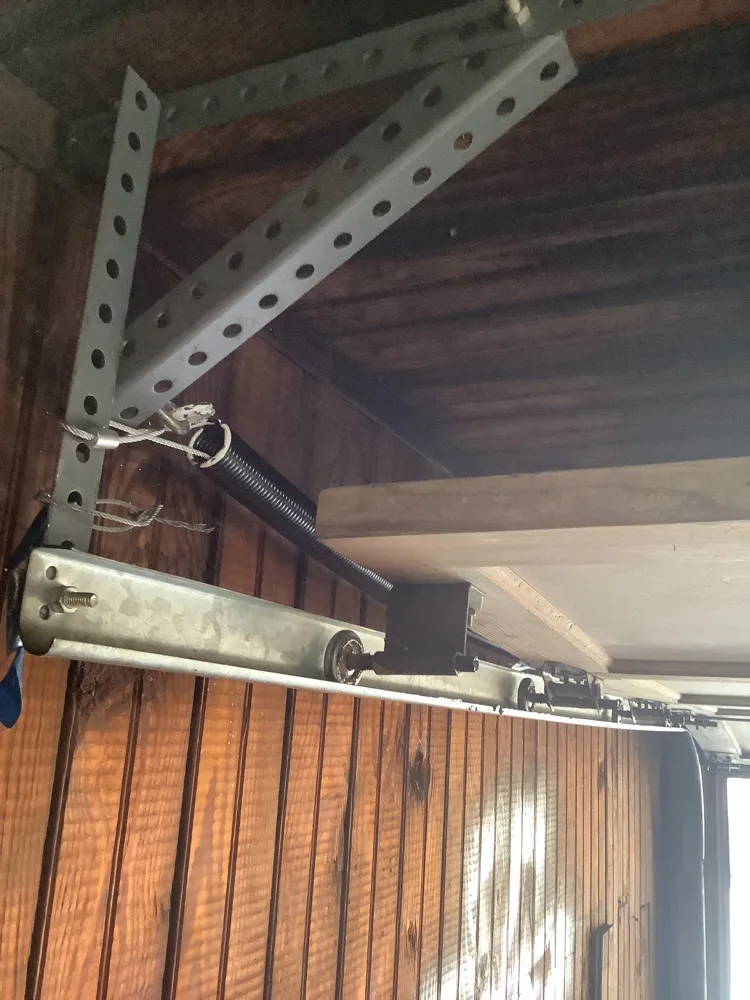
A hanger bracket carrying the track with the spring hooked into it. Everything above the door hangs off fixings like this one.
Where we work
Fountain Hills first, then out across the north-east Valley
Fountain Hills, Scottsdale, Rio Verde, Cave Creek and the rest of north-east Maricopa County, Arizona.
- Fountain Hills
- Scottsdale
- Rio Verde
- Cave Creek
- Carefree
- North-east Maricopa County
Happy to look at it before it breaks.
A tune-up on a noisy door is the cheapest visit we do, and it is a great deal cheaper than the same door after the cable lets go.